
Amethyst is a violet to purple type of quartz employed as a gem and ornament. It develops in geodes and hydrothermal veins when silica-rich fluids cool and iron and other trace elements transform crystal color. Hardness is 7 on the Mohs scale, therefore it withstands everyday wear and fits jewelry such as rings, necklaces, and bracelets. Color varies widely, from pale lilac to deep purple, with the darker tones generally preferred and more prized. Other significant sources include Brazil, Uruguay, and Zambia, each noted for different crystal sizes and shades. Gem treatments are slight, usually just heat to modify color. Care, value, and detecting natural amethyst versus common imitations are covered in the next sections.

What is Amethyst?
Amethyst, a popular gemstone, is a violet variety of quartz prized for its stunning purple color and crystal habit. This exquisite gemstone occurs in crystalline clusters, points, and tumbled stones, making it a favorite in jewelry and ornamentation as it combines visual appeal with functional hardness. Its name comes from the Greek word amethystos, meaning ‘not intoxicated,’ reflecting ancient beliefs that this purple gemstone could ward off drunkenness. With its rich cultural heritage, amethyst continues to captivate collectors, designers, and retailers alike.
1. Geological Formation
Amethyst occurs when silica-rich fluids seep into cavities in volcanic rock, particularly basalt, and cool at a rate that allows quartz crystals to form. Over eons, trace quantities of iron are incorporated into the quartz lattice, and subsequent natural irradiation modifies the iron, generating the purple hue. As a result, large, showy geodes of amethyst develop when gas bubbles in lava leave hollow pockets that later fill with crystals, which is a common occurrence in Rio Grande do Sul, Brazil. Primary geological settings for sourcing comprise volcanic basalt cavities, hydrothermal veins, geode fields, and metamorphic regions where silica fluid flow took place, highlighting the significance of this remarkable stone in the mineral kingdom.
2. Color Origin
The color of amethyst ranges from light lavender to deep purple, with trace iron and natural radiation contributing to their hues. The highest quality amethyst, historically referred to as ‘Deep Siberian’, consists of about 75 to 80 percent primary purple, complemented by 15 to 20 percent blue and modulating red overtones that vary with lighting. Accents of secondary hues, such as red or blue, can enhance the aesthetic value of these gemstones. Some amethyst crystals display banding, recognized as chevron amethyst, while variants like green quartz and pink amethyst offer diverse color and price points for comparison when selecting stock.
3. Physical Properties
Amethyst, a popular gemstone from the quartz family, exhibits a Mohs hardness of 7, which allows it to be used in jewelry such as rings, necklaces, and bracelets for everyday wear. Its vitreous luster and transparency range from transparent to translucent, making it an exquisite gemstone for decorative objects. Here is a comparison chart with other quartz varieties, including relative hardness, refractive index, and typical applications for customer education.
4. Geographic Sources
Other significant sources of amethyst crystals include Brazil, particularly Rio Grande do Sul, Uruguay, Siberia, Zambia, and South Korea. The origin of these precious gemstones affects their tone; for instance, Uruguayan and Zambian stones often yield deeper purples, while Brazilian material is abundant and commonly found in large geodes. In certain locations, such as Artigas in Uruguay, characteristic geode shapes are highly valued by enthusiasts. Supplier source disclosure backs transparency and marketing. Amethyst is February’s birthstone.
The Amethyst Legacy
Amethyst’s tale winds through humanity as a coveted purple gemstone and a multifaceted emblem. Cherished for its color and hardness, this exquisite gemstone transitioned from tombs and temples to crowns and new-age spas. The stone finds its way into art, ritual, and royal regalia and still provides vivid visual and cultural signposts for marketers and storytellers to tap into a broad public imagination.
Ancient Beliefs
Ancient Greeks believed that amethyst, a stunning purple gemstone, could protect men from drunkenness, leading them to carve drinking cups or wear amulets for sobriety. Egyptians also valued amethyst, carving it into ornaments and funerary pieces, viewing it as a talisman for life and death. Tiny amethyst beads, which are a part of the quartz family, continue to surface in tombs and on sarcophagi. This exquisite gemstone is associated with Diana and used in devotional objects. Prayer beads and carved figures employed amethyst to signify spiritual attention. Tibetan traditions incorporated this remarkable stone into meditation and prayer beads to support a deeper spiritual connection, reflecting its protective qualities and the clarity it brings to the mind.
Royal Symbolism
Once considered a cardinal gem along with diamond, sapphire, emerald, and ruby, amethyst, a remarkable stone from the quartz family, possessed stature and symbolism. European crowns, scepters, and episcopal rings were frequently adorned with this exquisite gemstone, where the name “Bishop’s Stone” associated the gem with spiritual authority and chastity. Its regal application was as much about hue and scarcity as metaphor. Purple dye and purple gems both denoted status. The Empress of Uruguay, a giant geode more than 3.5 meters tall and in excess of 2,000 kilograms, demonstrates the stone’s size and timeless attraction. Framing amethyst pieces as classic, elegant options emphasizes their prestige and wearability.
Modern Meaning
Today, amethyst crystals are positioned within wellness communities and crystal healing for clarity, serenity, and protection. Folks employ this purple gemstone for anxiety, emotional equilibrium, and sleep assistance. It connects to the Third Eye and Crown Chakras, which is why it’s frequently used in meditation implements. As February’s birthstone, it imparts calm and wisdom to those born then. For modern readers, focus on utility—a bedside stone for sleep, a pendant for everyday tranquility—while maintaining humble and culturally sensitive assertions.
Evaluating Amethyst Quality
There should be insightful criteria for evaluating amethyst, a popular purple gemstone, so that both buyers and makers select stones that align with design and market demands. Four things determine appeal and value: color, clarity, cut, and carat weight. The tips below describe what to look for, give hands-on checks, and provide an easy team checklist to normalize choosing quality amethyst.
Color
These deep, saturated purples of amethyst crystals are the most highly prized among gemstones. The highest grades exhibit a uniform deep violet with no brown or gray overtones, while excessive depth can conceal internal characteristics. Any bronzing or dullness reduces value substantially. Color varies from very pale to very dark, and color zoning, which is common, detracts value only when visible. This is best observed by examining the stone face down through the pavilion on a white background. Regional differences matter; Zambian amethyst often shows a highly saturated raspberry-purple, while many Brazilian stones may contain more inclusions and less uniform color.
Grade | Description | Notes |
|---|---|---|
A | Deep, even purple, no brown/gray tint | Best for fine jewelry |
B | Medium-rich purple, minor zoning | Good for mid-range pieces |
C | Pale or brownish/gray tint | Use for beads, accents |
D | Strong zoning or mixed brown tones | Decorative or craft use |
Clarity
For rings and pendants, we prefer eye-clean gemstones with high transparency, particularly when it comes to fine amethyst. Most faceted amethyst on the market showcases no eye-visible inclusions. However, when inclusions are visible and the color is attractive, cutters often opt for crafting cabochons or beads. Fractures or cloudiness can significantly affect the value and durability of these exquisite gemstones. It’s essential to check under even, strong white light and verify with a 10x loupe, ensuring the quality of your amethyst collection.
Cut
A good cut brings out the color and sparkle of gemstones. Common faceted cuts like oval, round, and cushion lend themselves to certain settings and impact perceived color intensity. The cut should minimize visible zoning and hide inclusions when possible. For deeper colors, shallower pavilion angles assist in showcasing the color, while for lighter stones, deeper facets enhance their saturation. Provide various cuts and sizes to fit design objectives in jewelry making.
Carat
Amethyst, a popular gemstone, varies in size, with larger gems often being more affordable, allowing designers to create statement pieces. The bigger the amethyst gem, the higher the likelihood of zoning or inclusions. Ultimately, value is more closely associated with color and clarity than carat weight, making it essential to carry a good spectrum of weights and match richly-hued stones with bold settings and smaller, eye-clean gems with elegant jewelry.
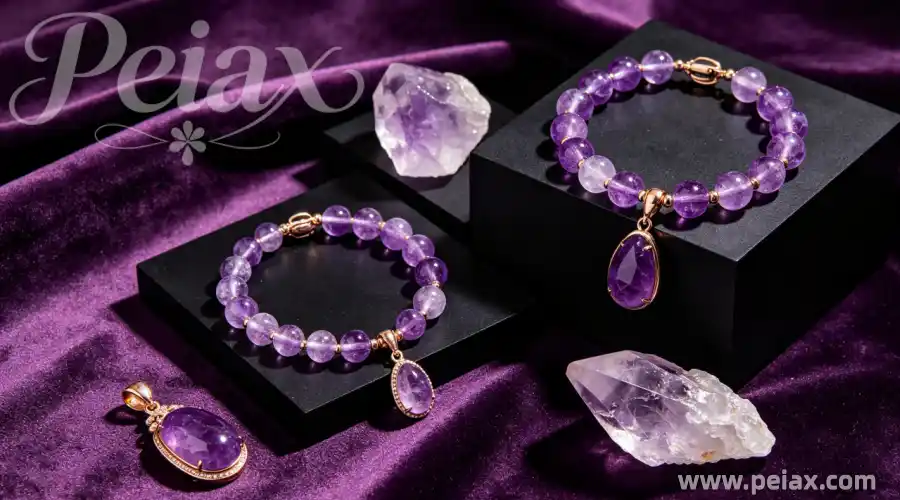
Natural vs. Synthetic Amethyst
Natural amethyst, a purple gemstone, forms in the earth as a purple quartz variety. Its color, derived from traces of iron and natural irradiation, can vary from light lavender to deep royal purple. Stones mined in South America, Canada, Africa, India, China, and Russia, often referred to as “Siberian” or “Rose de France,” exhibit unique characteristics. These natural amethyst crystals frequently display color zoning and tiny inclusions, narrating their own story and impacting their overall worth.
Identification
Gemmological testing is the foolproof means of differentiating natural and synthetic amethyst. They look at tests for growth and inclusions under magnification. Natural stones show irregular zoning, needle-like or mineral inclusions, and complex internal structures.
Synthetic amethyst, which is grown in laboratories, shares the same chemical and physical attributes as natural quartz. It can exhibit curved growth lines or very even coloration and significantly fewer inclusions. Synthetic stones are missing the natural zoning characteristic of mined amethyst.
Train staff to look for telltale signs: curved growth lines, absence of natural zoning, and overly even color suggest lab-grown material. Imitations such as glass or plastic are different. Small bubbles or an unnaturally consistent color usually indicate non-gem materials. If you provide origin information and test results, customers can choose.
Value
Natural amethyst costs more on average because of scarcity, source, and the appeal of natural inclusions. Color, clarity, and size still remain the prime price drivers for both natural and synthetic stones. Rich, evenly distributed purple is generally preferred and lighter lavender stones command lower prices.
Synthetic amethyst is an economical choice for fashion jewelry where looks trump heritage. It maintains style consistency between pieces as lab grown stones are more consistent. Remember to factor in treatments. Some amethysts are heat treated to enhance color or turned into citrine. Heat can cause a “burnt look” or smoky hues with orange or reddish-brown undertones.
Being explicit about why a stone costs what it does goes a long way towards aligning customer expectations. Keep in mind that amethyst ranks a 7 on the Mohs scale, so it is hard enough to stand up to a lot of jewelry wear.
Disclosure
Always, always, ALWAYS inform someone if an amethyst, a popular gemstone known for its purple color, is natural or synthetic at sale. Note any treatments, such as irradiation, heating, or dyeing that impact the appearance of the fine amethyst. Clear labeling and a written disclosure policy establish confidence and meet industry standards.
Amethyst in Your Business
Amethyst, a popular gemstone known for its visual beauty and functional toughness, resonates deeply with consumers and practitioners alike. This exquisite gemstone’s rich purple color and metaphorical meanings make it a sought-after choice in both product lines and office design, influencing market signals and customer motivations.
Market Trends
Spotlight styles that combine amethyst with on-trend metals, like rose gold amethyst rings and mixed-metal statement necklaces. Broho-inspired items, such as stacked amethyst beads and tassel necklaces, continue to be constant draws in e-commerce boutiques and craft caravans. Younger buyers are moving toward nontraditional engagement stones. Amethyst engagement rings, frequently in vintage or halo settings, are becoming popular as an option to differentiate.
Seasonal cycles matter: demand spikes around February, amethyst’s birth month, and again during major gift-giving holidays. Time limited runs, influencer collaborations, and email campaigns by watch search volume and social media mentions. Inventory tweak: have tiny, ship-immediately amethyst pieces for impulse gifts and a handful of high-end margin unique set pieces for the collector.
Customer Appeal
Amethyst’s deep purple color, broad price range and purported cooling powers make it an easy sell to any demo. Most consumers appreciate it as a February birthstone and as a special gift for anniversaries or milestones. Provide clear care instructions and layman symbolism, such as stress relief, sleep support and third-eye chakra intuition, for buyers in a non-medical way.
Create collections that span casual to formal: simple studs and bracelets for everyday wear, plus bold cocktail rings for events. Add information on how to cleanse and charge amethyst and its Mohs hardness of 7 to reassure customers of durability. Utilize product pages and lookbooks to demonstrate real-life styling and work-appropriate pieces.
Sourcing Ethics
Consumers want more traceability. They demand supplier information on mine origin and who is working the mines and prioritize vendors that have verifiable ethical standards. Share sourcing commitments on the product page and label to develop trust.
Tie-ins to sustainable mining programs or community projects in producing areas are important. Clearly defined supply chain stories and third-party audits minimize reputational risk and serve as part of your brand narrative.
Caring for Your Amethyst
Amethyst, a popular gemstone known for its exquisite purple color, is fairly tough with a Mohs hardness of 7.5. However, it still requires conscientious care to maintain its color and polish, ensuring the longevity of this remarkable stone in your jewelry collection.
Cleaning
To clean your amethyst jewelry, use mild soap and lukewarm water with a soft brush, steering clear of harsh chemicals or ultrasonic cleaners. Fill a bowl with lukewarm water, add a few drops of mild dish soap, and allow pieces to soak for 15 to 20 minutes to loosen oils and dirt. With a soft toothbrush, gently work around prongs, settings, and any crevices, then rinse under running lukewarm water.
Dry each piece with a soft lint-free cloth to preserve the stone’s luster and clarity. Avoid paper towels, which can leave fibers or micro-scratch. Occasional soft cleaning, approximately once a month for everyday-worn jewelry, washes away residue that diminishes the gem’s sparkle. Never clean amethyst with prolonged heat or direct sunlight, as heat and light can bleach out the purple hue or cause the stone to become brittle.
Storing
Keep your amethyst jewelry separate in a soft pouch or lined jewelry box to avoid scratches from harder gems or metals. Store stones in a dark or shaded area as amethyst can fade in exposure to light over time. A drawer or cloth-lined box is ideal. If you sell amethyst or have a collection at home, invest in a system to organize the pieces by type or size to make inventory and minimize handling.
Add a care card with storage tips to all amethyst jewelry purchases to inform customers. Have easy to understand do’s and don’ts such as “store away from sunlight” and “avoid bleach and acids.” Suggest laying pieces flat and not stacked. Stratified stock adds friction and the risk of chips.
Aftercare checklist to include with each sale: * Clean with mild soap and lukewarm water, soaking for 15 to 20 minutes.
Rinse and dry with a lint-free cloth.
Keep apart in a soft pouch, shield from light.
Take off before sports, gardening, or intense housework.
No bleach, acids, or ultrasonic cleaners.
Try moonlight or earth burial to recharge the stone.
Have it professionally checked and cleaned on occasion.
Handling
Amethyst jewelry requires careful handling; always use clean hands to avoid transferring oils or dirt onto the gemstone’s surface. Before engaging in any potentially abrasive activities, it’s wise to remove amethyst rings and bracelets to protect these exquisite gemstones. Although amethyst ranks 7 to 7.5 on the hardness scale, it can still scratch. Regularly inspect mountings to ensure the stone remains secure. Educating employees on proper amethyst care will enhance customer satisfaction and foster trust in your jewelry collection.
Conclusion
Amethyst is a distinct, valuable stone. Count on those rich violet shades to suit lots of looks. It is hard, but crisp and therefore easy to cut and set. Fine stones exhibit intense color and have minimal blemishes. Lab-grown pieces now match looks and are more affordable. Boutiques and web dealers can place amethyst onto shelves with minimal risk. Cleaning requires mild soap and a soft cloth. Keep it separate from hard stones.
Example: A 10 cm pendant with a deep purple hue sells well on craft sites. Example: A small batch of tumbled stones pairs well with gift sets.
Trust simple checks: color, clarity, and cut. Select image sources and search for images and keywords. Need a brief buying guide for amethyst or a one-page care card for customers? I can do one.
Frequently Asked Questions
What is amethyst?
Amethyst, a popular purple gemstone, is a remarkable stone from the quartz family prized for its color and clarity. This exquisite gemstone develops in geodes and veins, adorning jewelry and decorative objects with its beauty and toughness.
How do experts judge amethyst quality?
Quality gemstones depend on color, clarity, cut, and carat weight. Deep, even purple amethyst with fewest inclusions scores highest, making it a remarkable stone for jewelry making.
Is amethyst natural or synthetic?
Both are raw amethyst crystals that are born within the Earth, while synthetic amethyst is lab-grown with the same quartz chemistry. Labs or gem reports can verify the origin.
How can I tell amethyst from other purple stones?
Examine hardness; amethyst, a popular gemstone in the quartz family, ranks 7 on Mohs. Consider its crystal structure and characteristic color zoning, as a gemologist can employ spectroscopy and microscopy for definitive identification.
How should I care for my amethyst?
Wash your precious gemstones with warm soapy water and a soft brush. Avoid harsh chemicals and excessive sun exposure, as these can cause fading in your exquisite gemstone collection.
Can amethyst add value to my business products?
Yes, amethyst, a popular gemstone known for its exquisite purple color, is universally appealing and affordable. Build trust and sales with authenticated sourcing and transparent product photography. Lab reports add perceived value.
Are there health or spiritual benefits proven for amethyst?
While many appreciate the symbolism of gemstones like amethyst and citrine, there are no scientific evidences for any healing or spiritual claims, making it a personal or cultural belief.
Article author: Peiax | China Jewelry Supplier
Original source: https://www.peiax.com/what-is-amethyst/