Types of jewelry are the different styles of fashion accessories made from precious metals, gemstones, glass, wood, and other substances. Typical examples are rings, necklaces, bracelets, earrings, brooches, and watches, all of which assume either decorative or symbolic functions. From gold to beads, styles vary widely, including gold, silver, platinum, and stainless steel, pearls, synthetic stones, minimalist, and ornate. For marking milestones, making a statement, or for cultural or religious purposes, jewelry serves various roles. While each has its own size, weight, and care requirements, your comfort and convenience should be a top priority. The sections below describe primary categories, popular materials, typical applications, and helpful advice on selecting and maintaining jewelry to suit daily lifestyles and budgets.
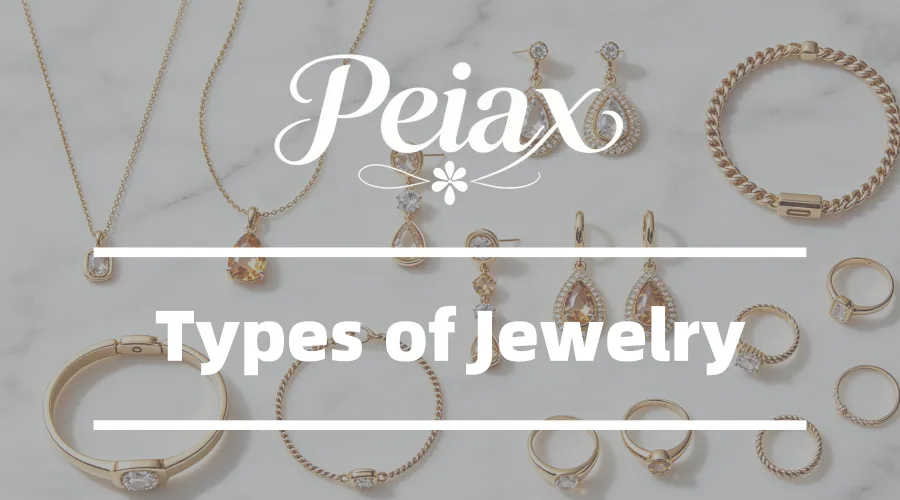
The Essential Types of Jewelry
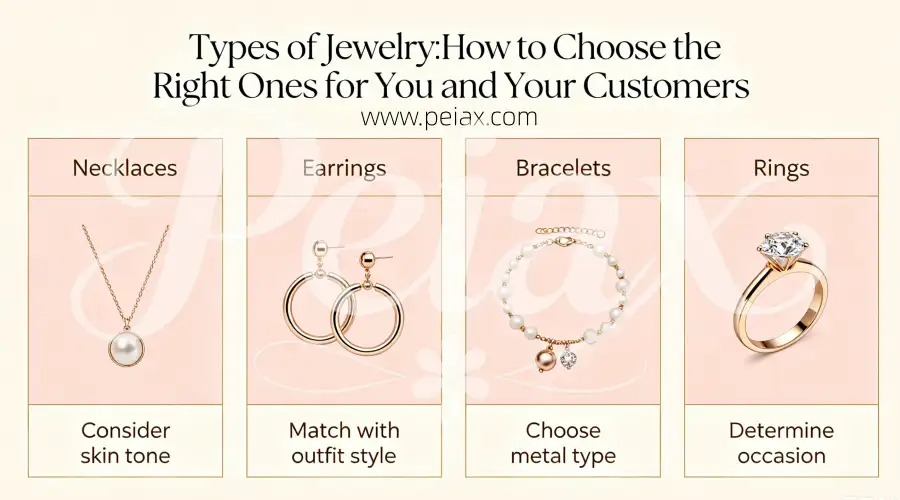
Jewelry comes in essential varieties, including popular options such as necklaces, earrings, bracelets, and rings. These typical jewelry types exist in fine, bridge, and costume categories, crafted from materials ranging from gold jewelry and platinum to stainless steel and base metals. Precious metals and semi-precious stones like diamonds, sapphires, and emeralds appear in many pieces, utilizing various settings like prong and channel to enhance how gems sit and catch light.
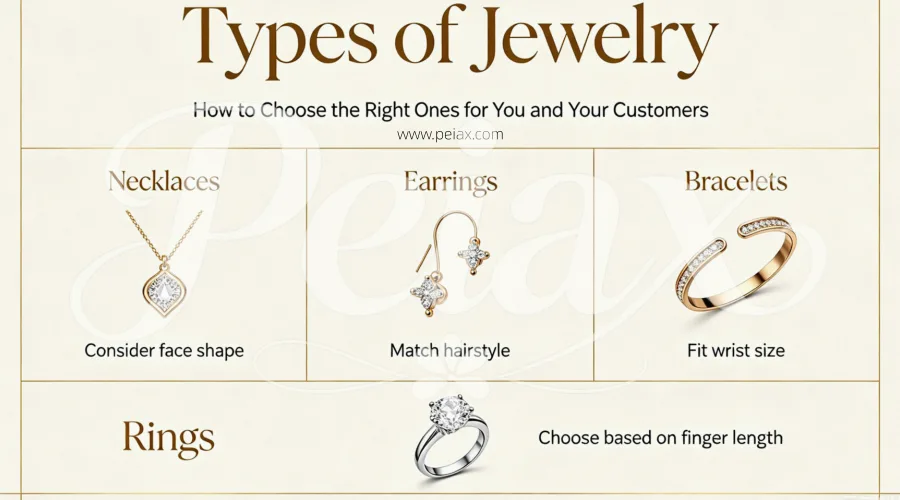
1. Neck Adornments
Necklaces, chains, chokers, pendants and lockets come in different lengths for different purposes. A choker sits high and says bold. A matinee or opera length says formal. Style and clasp impact comfort since heavier links can snag or pull at delicate fabrics.
Design choices change a look: a diamond pendant can be fine jewelry and a beaded strand fits costume or bohemian styles. Match length to neckline. Crew necks take shorties and V-necks suit pendants. Select occasion-appropriate metal and stone. Layered combinations pair thin chains with a statement locket for a contemporary, personalized vibe.
2. Ear Ornaments
Studs, hoops, drops, dangles, huggies, ear cuffs and jhumkas encapsulate the majority of earring requirements. Little studs work for the boardroom. Long dramatic drops are suitable for the evening. Round faces often look great with elongated drops, whereas hoops soften angular jaws. Face shape and hair length help guide choice.
Sensitive ears require hypoallergenic metals such as surgical steel, titanium, or 14k gold. Statement earrings are the anchors of party and formal looks with oversized stones or decadent settings.
3. Hand and Wrist Wear
Bracelets, bangles, cuffs, charm bracelets, and hand chains all play both everyday and special-use functions. Stackable bracelets and mixed-metal sets are on trend, allowing wearers to mix and match gold, silver, and rose gold.
Think about sleeve length and what you’ll be doing. Slim bracelets go great with short sleeves, while wide cuffs are beautiful with rolled sleeves. Strong metals like stainless steel, platinum, or gold wear well daily and don’t scratch.
4. Finger Rings
Engagement rings, wedding bands, cocktail rings, signet rings, thumb rings and promise rings differ in significance and style. Gem settings and band width alter both comfort and style. Prong settings enhance stones and channel settings form streamlined lines.
Provide sizes or adjustable bands to appeal to more purchasers. Rings can represent commitment, status, or heritage. Estate pieces bring history and one of a kind design.
5. Brooches and Pins
Brooches and pins, categorized as typical jewelry types, adorn clothes, hats, and bags. Motifs vary from florals and animals to geometric shapes, offering jewelry shoppers various options to add a vintage touch or modern statement.
What Materials Define Jewelry?
Jewelry materials fall into three broad groups: precious metals, gemstones, and alternative materials. Each category, including popular options like gold jewelry and gemstone jewelry, influences hardness, price, maintenance, and the perceived worth of a piece, impacting wear life and resale value.
Material category | Common examples | Durability | Typical price point | Care needs |
Precious metals | Gold (yellow, white, rose), platinum, sterling silver, palladium, vermeil | High (platinum), moderate (14K/18K gold), lower for silver | High to very high | Polishing, avoid harsh chemicals, periodic inspection |
Gemstones | Diamonds, sapphires, emeralds, rubies, pearls, opal, jade, topaz, lapis lazuli | Very hard (diamond), softer (opal, pearl) | Very high to moderate | Clean per stone type, avoid heat/shock for softer stones |
Alternative materials | Stainless steel, titanium, brass, copper, enamel, beads, leather, glass, recycled metals, meteorite | Varies; stainless/titanium high, leather low | Low to moderate | Simple cleaning, some require drying, avoid chlorinated water |
Precious Metals
Gold is available in 10K, 14K, and 18K, with 14K and 18K being the most common. Karat refers to the purity of gold. Higher karats indicate more pure gold, but they also result in a softer metal. White gold is typically rhodium plated. Fine jewelry-grade platinum is usually around 90% pure, combined with iridium, palladium, or ruthenium for hardness. Sterling silver is 92.5% silver, so it is the standard for many items. Vermeil is sterling silver with thick gold plating, which is a cost-saving option.
Hallmark stamps indicate karat or fineness and assist in confirming authenticity, so purchasers should seek out such markings or certifications. Hypoallergenic metals such as platinum, titanium, and surgical-grade stainless steel minimize skin reactions and are ideal for sensitive skin. We suggest regular inspections for wear, particularly on prongs and clasps, to preserve value.
Gemstones
Diamonds, sapphires, emeralds, rubies, and pearls are classic gems, while others such as opal, jade, lapis lazuli, and topaz add cultural and aesthetic variety. Cut, clarity, and color identify a gemstone’s beauty and worth. Cut influences the gem’s sparkle, clarity reveals imperfections, and color can be rare or abundant based on the stone.
Hardness affects daily wear. Diamonds and sapphires suit rings. Opals and pearls need gentle use. Reputable lab certificates enhance buyer confidence and record treatments. For everyday pieces, pick durable stones and keep the fragile gems for special occasions.
Alternative Materials
Stainless steel and titanium are not only cheap but also ruggedly durable alternatives to traditional jewelry types. Some ultra-high-grade stainless steels are even non-magnetic, resembling platinum. Brass, copper, and recycled materials provide artistic freedom, making them popular options for costume jewelry, which often incorporates mixed materials for striking appearances at affordable costs. Handcrafted pieces that blend metals and beads resonate with niche purchasers, offering a unique narrative and artistry that appeal to jewelry shoppers.
Understand Jewelry’s Purpose
Jewelry is practical and symbolic across cultures and time, encompassing various types such as fine jewelry, costume jewelry, and precious metal options. It can be worn casually, for special events, or as a sentimental keepsake, influencing the choice of materials and design. Consider how you’ll use the piece before purchasing or creating it.
Everyday Pieces
Everyday jewelry types are designed to be comfortable, hard-wearing, and effortless to pair with laidback outfits. Opt for simple styles and neutral metals like sterling silver or 14k gold jewelry that coordinate with the majority of your wardrobe. Lightweight chains, petite studs, and sleek bands minimize abrasion to skin and piece alike. Hypoallergenic, nickel-free, or surgical steel pieces let those with sensitive skin breathe easy all day. Provide sets or mix-and-match choices so jewelry wearers can layer or swap without clashing. A thin gold chain, a simple band, and a low-profile hoop, for instance, yield a multitude of looks. Materials vary from precious metals to enamel and semiprecious stones, and straightforward design facilitates repair and maintenance.
Occasion Wear
Occasion jewelry, which falls under various types of jewelry, is bolder and designed to pop at parties, weddings, and formals. Employing big settings, decadent stones, and fine metal work makes an impact under the lights. To truly stand out, consider coordinating pieces with your outfit color and event theme—think sapphires for navy dresses or gold jewelry accents for warm-toned gowns. Limited edition or seasonal collections appeal to buyers shopping for specific occasions. Collectors frequently seek statement necklaces, chandelier earrings, or cuff bracelets to fill this order, as these pieces continue to symbolize sophistication and elegance.
Symbolic Items
Symbolic jewelry types can include engagement rings, wedding bands, religious pendants, amulets, and birthstone pieces. Imbued with cultural value and emotion, these items often become cherished heirlooms. Engraving or personalization enhances their meaning, showcasing quality and craftsmanship for future generations. Using good metals and secure settings ensures the longevity of these pieces. Historically, certain items like signet rings served functional purposes, while across cultures, jewelry has been crafted to ward off spirits or bring luck. Artisan makers continue to create unique symbolic pieces that reflect individual style.
How to Choose Jewelry
Choosing jewelry types begins with clear priorities: occasion, personal style, and budget. Are you looking for heirloom, bridal, or personal jewelry pieces? Consider comfort, everyday wear, and longevity. Platinum and alternative metals are ideal for everyday wear. Tungsten is scratch resistant, and comfort-fit bands appeal to most men. Test various types in natural light and ask three simple questions: What is the occasion? What’s your style? What’s your budget?
Personal Style
Determine if your style is classic, contemporary, boho, or unique, and use that to inform your jewelry types purchases. Start with staple pieces that match your daily wardrobe: simple studs, a fine chain, a plain band, or a slim bracelet that you can wear most days. Incorporate a few statement or handmade pieces, like a bold pendant or mixed-material earrings, to express your personality. Create a family of jewelry by using repeated shapes, metals, or stone colors to make new pieces fit into your existing collection.
Skin Tone
Warm skin tones rock with yellow gold jewelry and earthy gems like citrine or amber, while cool tones complement silver, platinum, and blue or green stones like sapphire or emerald. When shopping for jewelry types, it’s essential to test pieces against your skin in natural light for the most accurate match, as indoor lighting can be deceptive. Utilizing metal and stone swatches can help minimize guesswork, especially when considering various types of jewelry.
Face Shape
Select earring and necklace styles to offset your facial features, considering various types like long drop or teardrop earrings that elongate a round face. Studs and medium hoops soften sharp cheekbones, while collar and choker necklaces flatter longer necks, anchoring high collars effectively. V-shaped pendants and shorter chains complement shorter necks. It’s essential to pay attention to scale: oversized pieces can overwhelm petite frames, while very small items may disappear on larger frames. Additionally, think about lifestyle and comfort, as weighty or dangle pieces might not work on your busy days or in a formal office environment.
Evaluating Craftsmanship and Value
Evaluating craft and worth starts with examining materials, construction, and origin, particularly for fine jewelry. Look for purity stamps of 14k, 18k, or 925 for silver and request tests—touchstone or spectrometer—to verify alloy composition. Condition, maker, age, demand, and documented provenance all factor into value, especially for typical jewelry types like estate pieces. Insurance replacement cost and expert appraisals are important when valuing for resale or insurance coverage.
The Artisan’s Mark
Maker’s marks, hallmarks, and signatures convey significant information about the jewelry types, including where and when they were made. A transparent mark can indicate metal fineness, country of origin, or manufacturer identification, while some marks reveal the year of manufacture. Backing familiar craftspeople usually equates to purchasing pieces with increased uniqueness and attention, particularly in fine jewelry. Handmade pieces display tighter joins and a soft asymmetry that indicates people, not cast repetition. Provenance increases buyer confidence and may even boost resale value, especially for pieces from highly coveted names.
Assessing Quality
Check settings for tight, even prongs and bezels, as loose stones can indicate quality issues. Inspect clasps and solder joints; nice, smooth, flush solder and secure clasps reflect good shop practice. Use a loupe to determine gemstone clarity and identify any filler or glue. Lab reports are especially beneficial for the most valuable stones, particularly in the realm of fine jewelry. Silver and plated goods vary in their resistance to tarnish, so examine the thickness of the plating and the base metal. Comparing weight and feel can also help you identify typical jewelry types, as denser metals and solid construction often indicate better quality.
Investment Potential
Above all, in order to evaluate craftsmanship and value, consider the typical jewelry types and the quality materials used. Timeless designs and work by renowned artisans attract collectors and retain value more effectively than fads. Follow the markets in gold jewelry and rare stones, as price fluctuations determine when to resell them. Record purchases, store certificates and appraisals, and maintain lab reports for stones.
Preserving Your Pieces
Preserving your fine jewelry pieces begins with clean, easy guidelines that protect them and keep them shining. Wash before you stash. Oils, sweat, and gunk quicken tarnish and wear. Wipe each piece with a soft cloth and knock grit from settings with a soft brush and plain water. As for metals, common sense applies: a mild soap solution for gold, a silver polishing cloth for silver, and warm water with mild dish soap for gemstone jewelry pieces. Stay away from ultrasonic cleaners for porous stones such as opal or emerald. Gently clean those with a soft cloth and a little moisture.
Store items in a controlled environment to slow chemical change and physical wear. Aim for humidity between 45 and 55 percent and keep pieces at a steady room temperature away from direct sunlight. Good air circulation matters, but avoid drafts. Bathrooms, basements, and areas near heating vents are poor choices because they swing humidity and temperature. Use lined boxes or tarnish-resistant pouches to protect surfaces and prevent scratches. Anti-tarnish strips, vapor capsules, silica gel packets, or anti-tarnish pouches help control moisture and slow tarnishing.
WITHOUT A HEADACHE Preserve Your Pieces Store smart to minimize friction and prevent tangles. Store each piece in a separate pouch or compartment, separate metals, and insert layers of tissue between fine chains. For long chains, lay flat or loosely coil with tissue to prevent tangles. Examine stored pieces at least once a month for early signs of tarnish, loose settings, or damage. Spotting a loose prong early will prevent lost stones and expensive repair jobs.
Take off your jewelry before hard work, working out, swimming or exposure to household chemicals and pools. Chlorine, salt water and cleaning agents accelerate metal corrosion and damage finishes. Even makeup, perfume and lotion deposits films that dim stones and accelerate abrasion. Get dressed and then don jewelry, put on makeup and sprays before putting on pieces!
For valuable or heirloom pieces, schedule regular professional inspections and cleanings. A jeweler can test settings, tighten prongs, and professionally clean without putting fragile stones at risk. Get a check at least once a year, and more often for pieces worn chronically.
Conclusion
Jewelry holds remembrance, fashion, and attention all in one little thing. The big hitters—rings, necklaces, bracelets, earrings, and brooches—provide obvious options for every day or special days. Your metal, gem, and bead selections determine style, weight, and cost. Look for pieces that fit your lifestyle and resonate on your skin. Check joins, settings, and finish to judge true craftsmanship and enduring worth. Wash and mend each piece according to its requirements to maintain both color and shape. Try a simple routine: wear what fits your day, buy for quality over trend, and care for pieces before they show wear. Try styles, try materials, and keep faves in rotation.
Frequently Asked Questions
What are the main types of jewelry I should know?
The major jewelry types include rings, necklaces, bracelets, earrings, brooches, and pendants, each catering to different occasions, from daily wear to dressy events.
How do materials affect jewelry quality and value?
Metals such as gold, platinum, or silver, along with the presence of various types of gemstones, are key factors that determine the durability, appearance, and resale value of fine jewelry.
How do I choose jewelry that suits me?
Choose jewelry types that fit your lifestyle, skin tone, and personal style. Consider options like gold jewelry or fine jewelry for comfort and wearability, focusing on metal color and scale.
How can I evaluate craftsmanship before buying?
Check for clean finishes and tight settings in various types of jewelry, including gold jewelry and gemstone jewelry, as well as even soldering and hallmarks or maker’s marks.
How should I care for and store my jewelry?
Keep the jewelry types separated in soft-lined compartments. Protect and store your fine jewelry properly by using separate compartments or soft pouches to prevent scratching.
Are lab-grown gemstones as reliable as natural ones?
Lab-grown stones, a popular option in various types of jewelry, have the identical chemical and physical properties as their natural counterparts, making them a fantastic choice for jewelry shoppers.
How can I verify a piece’s authenticity and value?
Request hallmarks, gem certificates, and receipts for various types of fine jewelry. Purchase from reputable jewelers and insist on receiving written certificates.
Article author: Peiax | China Jewelry Supplier
Original source: https://www.peiax.com/types-of-jewelry/